Designed with, not for
Current risk
Housing retention programs are often designed primarily from organizational perspectives about what people need after placement rather than being informed and led by people who have actually navigated houselessness, housing transition, and recovery.
National leaders like National Alliance to End Homelessness and National Homelessness Law Center are clear that this is where systems fall short and where the strongest solutions come from.
With the design lab
Neighbors with lived experience shape the work from day one. Their expertise becomes our foundation and reshapes how Missoula responds to houselessness.
What the Lab produces adds additional strengthen to the local services system and leads to lasting stability.
A differentiated layer on committed work
Our work addresses a critical gap in the local system: structured, coordinated support after housing placement for people who do not have access to embedded supportive services.
- We walk alongside recently housed neighbors as they settle into their new home
- We connect people to trusted relationships, community, and a sense of belonging on their own terms.
- We bridge neighbors to services and support in moments of need, staying alongside them until they feel safe and secure.
- Funding Organization
Montana Opioid Abatement Trust
- City of Missoula Initiative
Pathways to Housing Stability
- Team on the ground
Housing Stability Collective
An early-stage design investment
with system-wide return
Your investment brings people with lived experience to the design table from the start. An approach shown to support stronger, more lasting housing stability
- 01
Discovery
Research & Insights1:1 sessions where peer experts map their journeys through the system, surfacing strengths, stress points, and barriers. Individual stories become shared patterns and moments that matter.
- 02
Co-Design
IdeationPeers turn insights into responsibilities, guardrails, and practical tools that will guide the Housing Stability Collective’s approach.
- 03
Development
Peer-Led FeedbackPeers pressure-test the draft framework and refine it into peer-approved agreements and clear expectations.
- 04
Implementation
Framework & ToolsThe cohort finalizes the framework, roles, policies, and tools for use within the Collective and for sharing and collaborating with partner organizations.
- 05
Program Evolution
Feedback & IterationsOngoing feedback loops with participants, the Collective, and partners to iterate and evolve the program.
Where your dollars go
Participant stipends
6–8 participants · up to 40 hrs each
$20,000-$25,000Project design & facilitation (HSC team)
Participant recruitment, co-facilitation, synthesis
$7,000Design & co-facilitation (Sagrados Strategies)
Participant support, co-facilitation, follow-up
$9,500Documentation & prototypes
Playbook, templates, and participant-facing tools that improve housing stability
$5,000Research & evaluation
1:1 interview design, analysis, reporting and evaluations
$6,000Space, materials & hybrid tech
Meeting space, supplies, printing
$2,500Access supports
Meals, transit, childcare
$3,500Implementation and partner share-outs
Playbook publishing, and organizational share-outs, outputs that improve housing stability
$6,500Total
$60,000-$65,000
The upper range of $65,000 allows for additional support for our 6-8 participant stipends.
Deliverables informed by experience
Peer-defined problem statement
The problem statement in the words of those most impacted.
System journeys & moments-that-matter maps
Visualizing how people with lived experience actually move through complex services and support systems. What they're experiencing, what the system is doing (or failing to do), and the pivotal moments that shape housing stability and access to care.
Peer support role canvas
Expectations, goals, trust-building, and boundaries.
Written peer-designed framework
Policies, recruitment, and working agreements.
Participant & partner facing tools
Welcome guides, checklists, resources for mapping participant journeys, feedback loops strategies, etc.
Packaged deliverables to share
Peer-reviewed deliverables to share with organizational partners & future funders for feedback, insights and stronger collaboration.
How we will know it is working
We will use the same metrics we are using for Pathways To Housing Stability Initiative.
- Outcome 01
Fewer hospital and ED visits
35% decrease in hospitalizations and/or emergency department visits at 12 months, aggregated across all participants.
Self-reported by participants at intake and 12 months after services begin.
- Outcome 02
Housing stability and security
At least 75% of participants remain housed after 12 months of housing retention case management.
Total unique participants who retained housing, and the percent retained.
Percent of participants who report feeling secure in their housing.
- Outcome 03
Health and well-being
Well-being measured with the WHO-5 Well-Being Index.
90% of participants enrolled in health insurance.
90% of participants utilizing or connected to medical, behavioral, and/or mental health care.
- Outcome 04
System-wide understanding
Hours spent supporting each unique participant, per quarter.
Qualitative tracking of system barriers (habitability, landlord conflict, benefit delays, healthcare access).
Qualitative tracking of system supports (responsive case management, food resources, employment, budgeting, landlord mediation).
- Outcome 05
Better local data and reporting
95% data quality and completeness across all HMIS housing retention data fields.
Engagement in MCES-led housing retention activities.
- Outcome 06
Fewer returns to houselessness
Total unique participants who returned to houselessness from housing.
Percent of participants who returned to houselessness from housing.
From investment to lasting stability
A simple logic model showing how funding turns into daily support, and how that support turns into housing stability we can measure.
- 12–16
total weeks of discovery, ideation and implementation
Pilot Lab duration - $65k
funding request
Core pilot budget - 6
outcome areas
Housing stability, health, well-being
- Step 1
Inputs
Your investmentDiscovery (Research and data/insights gathering)
Co-Design
Development (Collective and partner facing tools)
Implementation
Program Evolution
- Step 2
Deliverables
What it producesPeer-defined problem statement
System journeys & moments-that-matter maps
Peer support role canvas
Written peer-designed framework
Participant & partner facing tools
Packaged deliverables to share
- Step 3
Outcomes
Our impactFewer hospital and ED visits
Housing stability and security
Health and well-being
System-wide understanding
Better local data and reporting
Fewer returns to houselessness
Design Lab guiding team
 Director, Housing Stability Collective
Sara Kauk
Sara brings a distinctive perspective, grounded in her roots as a Montanan, her lived experience growing up with adverse childhood experiences, and her human-centered design leadership. She is deeply committed to expanding access to services for people experiencing housing instability.
Over eight years at Expedia Group as a Lead and Director of Product Design, she guided cross-brand strategic initiatives for Expedia, Hotels.com, and Vrbo, aligning diverse teams around inclusive, user-focused standards and scalable design systems.
Téo (T) Ortega
Consultant, Housing Stability CollectiveA ninth-generation Mesilla Valley resident of Piro-Manso-Tigua and Tortugas Pueblo heritage. Téo draws on lived experience of homelessness, poverty, and behavioral health systems.
A decade of Continuum of Care leadership in system design, coordinated entry, and equity evaluation. Former HUD Technical Assistance provider. Roots in direct service as a Street Outreach Case Manager and Transitional Living Program Director.
 Principal, User Researcher
Shannon Riddle
Shannon brings 16 years of user research experience, a psychology background, and the empathy of her own experience as a single mom. She’s spent countless hours listening to understand people’s barriers and strengths, using qualitative and quantitative research to answer hard questions and amplify voices too often left unheard.
Most recently, she led research on Expedia’s core brand as a Senior User Researcher at Expedia Group.
- TBHPeer Specialist, Housing Stability Collective
TBH
Key frontline role supporting housing retention for recently housed neighbors in scattered-site placements across Missoula. Combines case management expertise with lived experience to deliver relationship-based, peer-informed support that helps tenants remain stably housed. Responsible for individualized stability planning, systems coordination, crisis response, and documentation aligned with Tenancy Support Service. Critical to translating pilot funding into measurable outcomes, stronger service continuity, and long-term program sustainability.
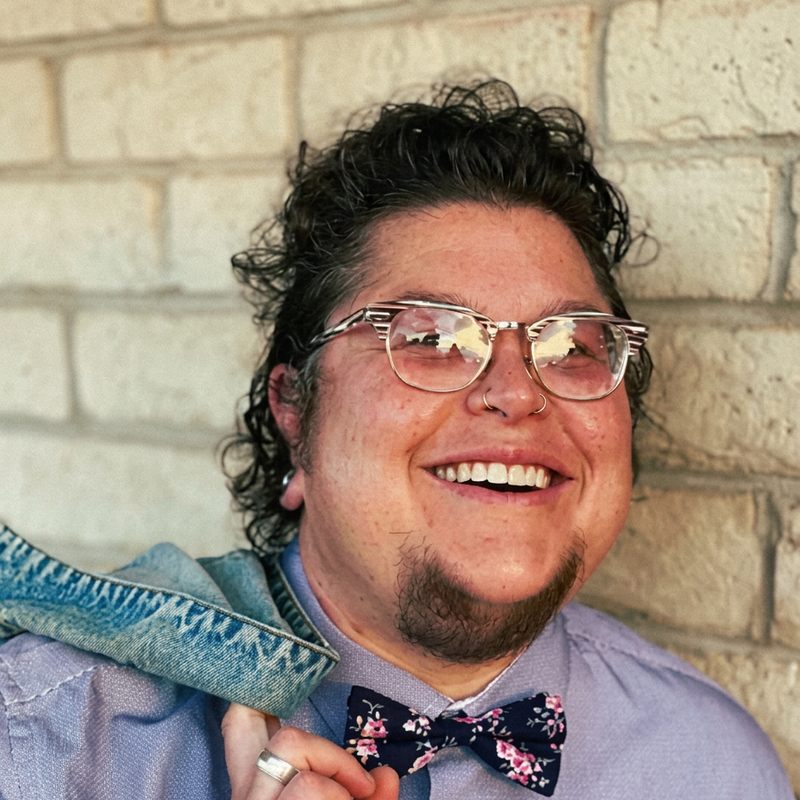
Fund our peer-powered,lived experience first approach.
People experiencing houselessness in every community have invaluable knowledge, direct experience, and clear and actionable ideas about how these systems work (or don't) and what would make them work better.
Contact: Sara Kauk | 406-370-6353 | sarak@hscmt.org